Connect With Us

Direct-to-Film (DTF) Printing for Custom Apparel: Technology, Process, and Use Cases
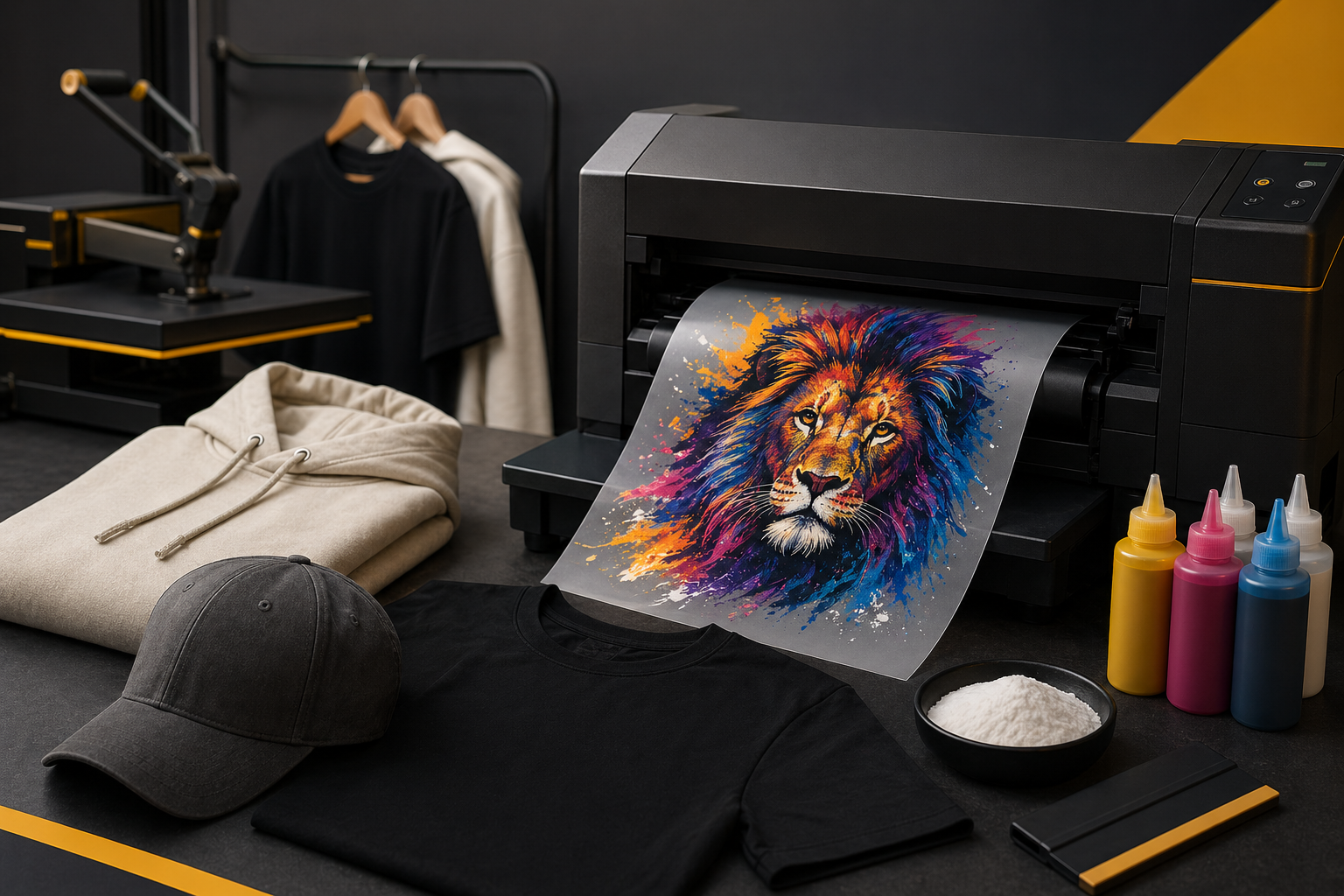
Direct-to-Film printing, commonly referred to as DTF printing, is a digital garment printing technology that transfers designs onto fabric using a printed film, adhesive powder, and heat press process. Unlike traditional textile printing methods such as screen printing or embroidery, DTF operates through a two-stage transfer system, allowing designs to be printed independently and later applied to garments.
From an entity-based perspective, DTF printing connects multiple core concepts such as PET film sheets, CMYK ink systems, white ink layering, adhesive powder bonding, heat transfer curing, and fabric surface compatibility. These interconnected elements define how DTF printing performs across different apparel categories.
In the custom merchandise ecosystem, DTF printing is widely used for multi-colour designs, small batch orders, and complex artwork reproduction, making it one of the most flexible printing methods available today.
How DTF Printing Works: Step-by-Step Process
Design Preparation and Digital Printing
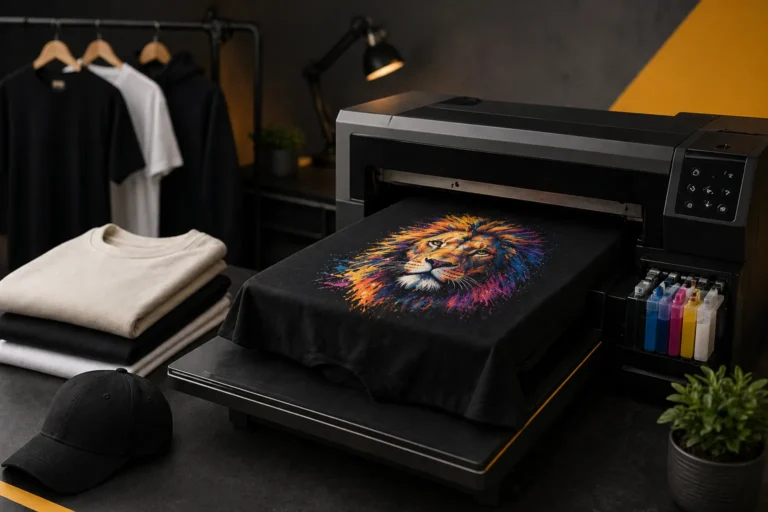
The process begins with preparing artwork in a digital format, typically using vector or high-resolution raster files. The design is printed onto a transparent PET film using specialised DTF printers that apply CMYK inks along with a white ink layer. The white ink acts as a base, ensuring color vibrancy across both light and dark fabrics.
Adhesive Powder Application
After printing, a layer of thermoplastic adhesive powder is applied to the wet ink. This powder is critical because it acts as the bonding agent between the printed design and the garment.
Heat Curing Process
The film with adhesive powder is then cured using controlled heat. This step melts the adhesive powder, forming a uniform bonding layer behind the design.
Heat Transfer onto Fabric
The cured film is placed onto the garment and pressed using a heat press machine. The combination of heat, pressure, and time transfers the design from the film to the fabric surface.
Film Removal and Final Finish
Once cooled, the film is peeled away, leaving the design adhered to the garment. A secondary press may be applied to improve durability and finish.
Core Components of DTF Printing Technology
Understanding DTF printing requires analysing its core components and how they interact.
PET Transfer Film
The PET film acts as the carrier medium for the design. It must withstand high temperatures and maintain dimensional stability during transfer.
White Ink Layering
White ink is a defining element of DTF printing. It allows designs to maintain color accuracy and opacity, especially on dark fabrics.
Adhesive Powder Bonding
The adhesive powder determines how well the print adheres to the fabric. Its melting behaviour and bonding strength directly influence print durability and flexibility.
Heat Press Parameters
Temperature, pressure, and time control the transfer quality. Incorrect settings can lead to poor adhesion, cracking, or peeling.
Fabric Compatibility and Performance Behavior
One of the strongest advantages of DTF printing is its broad fabric compatibility.
Cotton Fabrics
DTF works effectively on cotton fabrics, producing vibrant prints without requiring pre-treatment, unlike DTG printing.
Polyester Fabrics
DTF is highly suitable for polyester garments because it avoids issues like dye migration when handled correctly.
Blended Fabrics
Cotton-poly blends perform well with DTF printing, making it a versatile option for mixed-fabric garments.
Performance Fabrics
DTF is widely used for sportswear and Dri-Fit garments, as it allows printing without damaging moisture-wicking properties.
This flexibility makes DTF one of the most adaptable printing technologies in the custom apparel industry.
Advantages of DTF Printing in Custom Apparel
DTF printing has gained popularity due to several performance advantages:
High design flexibility
Capable of printing detailed artwork, gradients, and multi-colour designs.
No minimum order requirement
Ideal for single-piece orders and small batch production.
Wide fabric compatibility
Works on cotton, polyester, blends, and performance fabrics.
Consistent output quality
Digital printing ensures repeatable results across orders.
Reduced setup complexity
Unlike screen printing, no separate screens are required.
Limitations of DTF Printing
Despite its advantages, DTF printing has certain limitations:
- Slightly thicker print feel compared to screen printing
- Not as breathable as water-based prints
- May not be as cost-efficient for very large bulk orders
Understanding these limitations helps businesses choose the right method based on production requirements and design complexity.
When to Choose DTF Printing
DTF printing performs best in specific scenarios:
- Small to medium quantity orders
- Multi-colour or detailed designs
- Custom merchandise with variable artwork
- Sportswear and performance apparel
- On-demand printing models
For startups and brands, DTF enables low-risk production with high design flexibility.
DTF Printing vs Other Printing Methods
DTF Printing vs Screen Printing
Screen printing is better for bulk production and simple designs, while DTF is ideal for complex artwork and smaller quantities.
DTF Printing vs DTG Printing
DTG requires fabric pre-treatment and works best on cotton, whereas DTF works on multiple fabric types without pre-treatment.
DTF Printing vs Sublimation
Sublimation is limited to polyester fabrics, while DTF can be applied to a wider range of materials.
These comparisons establish semantic relationships between printing technologies, helping both users and search engines understand contextual differences.
Cost Structure of DTF Printing
The pricing of DTF printing depends on several variables:
- Design size and complexity
- Number of colours (less relevant compared to screen printing)
- Order quantity
- Fabric type
- Print placement
Unlike screen printing, DTF does not require setup costs, making it more cost-effective for low-volume orders.
Quality Factors That Influence DTF Printing Results
Several technical variables determine final print quality:
- Ink quality and calibration
- Adhesive powder consistency
- Heat press accuracy
- Film quality
- Fabric surface texture
Proper control of these variables ensures consistent adhesion, flexibility, and durability.
Use Cases of DTF Printing in Apparel Industry
DTF printing is widely used across different segments:
- Custom T-shirts and hoodies
- Sports team apparel
- Corporate merchandise
- Event T-shirts
- Startup merchandise
- Personalised clothing
Its flexibility makes it suitable for both individual customers and bulk buyers.
How TrendyDice Uses DTF Printing for Custom Apparel
At TrendyDice, DTF printing is optimised for high-detail designs, low-quantity orders, and fast production timelines.
By using calibrated printing systems, high-quality films, and controlled heat transfer processes, TrendyDice ensures that each garment delivers:
- consistent color output
- durable print adhesion
- flexibility across fabric types
This allows customers to order from single pieces to medium-scale batches without compromising on quality.
Frequently Asked Questions About DTF Printing
What is DTF printing on T-shirts?
DTF printing is a digital printing method where designs are printed on a film and transferred onto fabric using heat and adhesive powder.
Is DTF printing durable?
Yes, when properly applied and cured, DTF prints are durable and can withstand multiple washes without significant fading or cracking.
Is DTF better than screen printing?
DTF is better for small quantities and detailed designs, while screen printing is more cost-effective for bulk production.
Can DTF printing be used on polyester?
Yes, DTF works well on polyester and other synthetic fabrics, making it suitable for sportswear.
Does DTF printing feel heavy on fabric?
DTF prints can feel slightly thicker compared to water-based prints, but modern techniques improve flexibility and comfort.