Connect With Us

Embroidery vs Printing: Choosing the Right Method for Custom Apparel
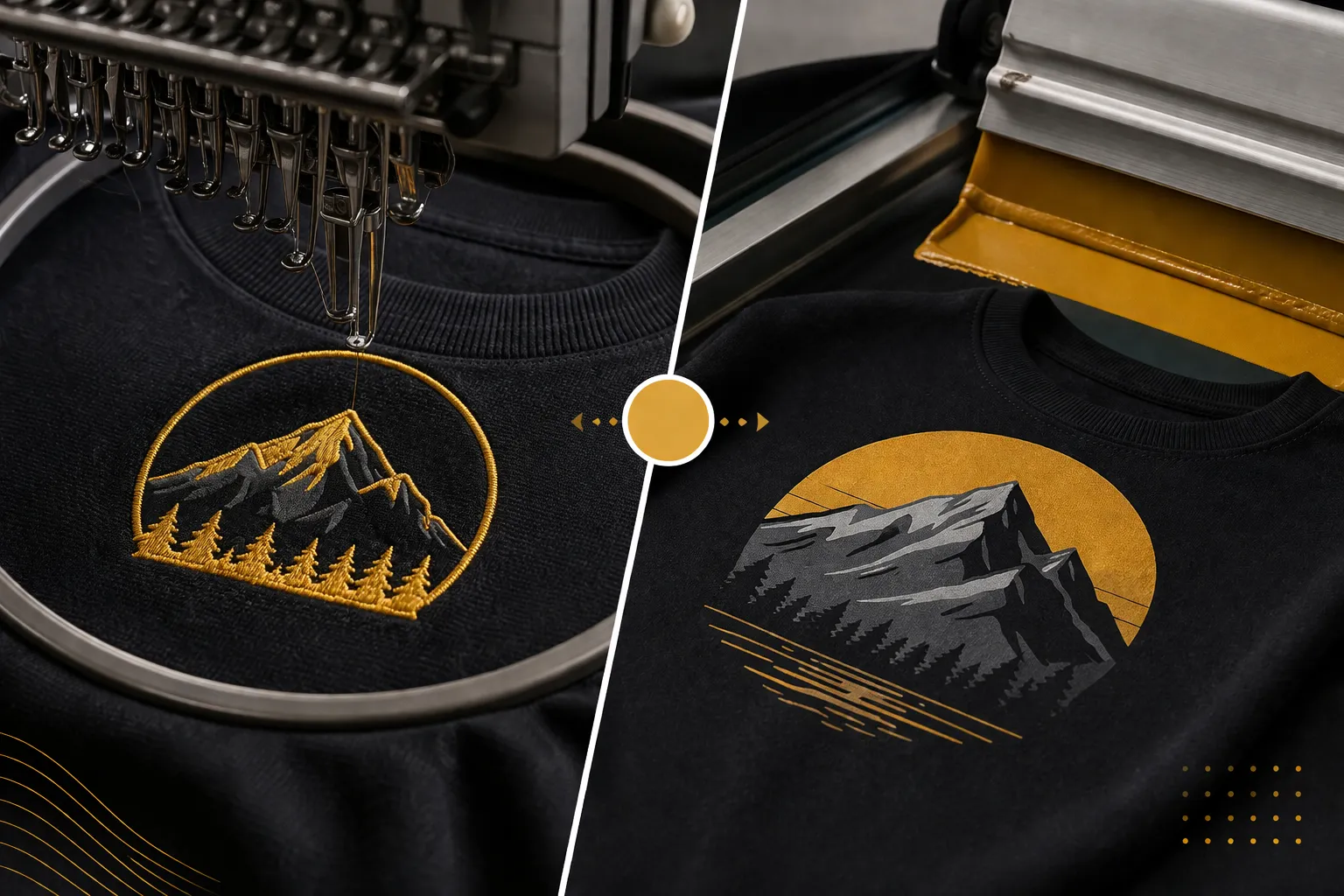
When customizing apparel, one of the most important decisions is choosing between embroidery and printing. This decision directly impacts visual appearance, durability, cost, fabric compatibility, branding perception, and long-term usability.
From an entity-first perspective, embroidery and printing operate through fundamentally different mechanisms. Embroidery involves thread stitching, digitized patterns, needle systems, and stitch density, while printing relies on ink application, transfer methods, curing processes, and fabric absorption behavior.
Understanding how these systems interact with fabric types, design complexity, order size, and usage context is critical for selecting the right method.
What is Embroidery? Structure, Process, and Output
Embroidery is a textile decoration method where designs are stitched onto fabric using thread.
How Embroidery Works
Designs are converted into digitized stitch files, which guide embroidery machines to create patterns using threads.
Key Components
- Embroidery machine
- Needle system
- Thread (polyester/rayon)
- Stabilizer backing
Output Characteristics
- Raised, textured finish
- High durability
- Premium appearance
Embroidery is commonly used for logos, branding, uniforms, and premium apparel.
What is Printing? Types, Technology, and Behavior
Printing involves applying ink or transferring designs onto fabric.
Common Printing Methods
How Printing Works
Ink is either applied directly or transferred using heat, depending on the method.
Output Characteristics
- Flat design surface
- High detail capability
- Flexible design options
Printing is widely used for custom T-shirts, promotional apparel, and large-scale designs.
Embroidery vs Printing: Core Differences
1. Visual Appearance
Embroidery creates a 3D, textured, premium look, while printing produces a flat, smooth design.
2. Design Complexity
Printing supports complex designs, gradients, and multiple colors.
Embroidery is limited to simpler designs and solid color patterns.
3. Durability
Embroidery is extremely durable and does not fade or peel.
Printing durability depends on the method:
- Screen printing → very durable
- DTF → durable but slightly less than screen
- DTG → moderate durability
4. Fabric Compatibility
Embroidery works well on:
Printing compatibility varies:
- cotton → DTG, screen
- polyester → sublimation, DTF
5. Cost Structure
Embroidery cost depends on:
- stitch count
- design size
Printing cost depends on:
- number of colors
- print size
- order quantity
6. Order Quantity Suitability
Embroidery is better for:
- small logos
- uniforms
Printing is better for:
- bulk orders
- full-front designs
Embroidery vs Printing: Detailed Comparison
| Factor | Embroidery | Printing |
|---|---|---|
| Finish | Textured | Flat |
| Durability | Very High | High (method dependent) |
| Design Complexity | Limited | High |
| Cost (Small Orders) | High | Low |
| Cost (Bulk) | Medium | Low |
| Best Use | Logos | Large designs |
When to Choose Embroidery
Embroidery is ideal when:
- You need premium branding
- Designs are small (logo on chest)
- You want long-term durability
- Apparel is used for uniforms
When to Choose Printing
Printing is best when:
- Designs are large or detailed
- Multiple colors or gradients are required
- You need cost-effective bulk production
- You are creating promotional or fashion apparel
Embroidery vs Printing for Different Use Cases
Corporate Uniforms
Embroidery is preferred for a professional and premium look.
College Merchandise
Printing is more common due to design flexibility.
Sportswear
Printing (especially sublimation/DTF) is better due to fabric compatibility.
Startup Merchandise
Printing is ideal for testing multiple designs.
Limitations of Embroidery
- Not suitable for large designs
- Higher cost for complex patterns
- Limited color blending capability
Limitations of Printing
- Some methods may fade over time
- Less premium compared to embroidery
- Durability varies by method
Cost Comparison: Embroidery vs Printing
Embroidery cost increases with stitch count and design complexity.
Printing cost increases with:
- design size
- color usage
- printing method
For bulk orders, printing is generally more cost-effective.
How to Choose Between Embroidery and Printing
The decision depends on:
- design type (logo vs full design)
- fabric type
- order quantity
- budget
- intended use
Selecting the right method ensures optimal visual output and cost efficiency.
How TrendyDice Helps You Choose the Right Method
At TrendyDice, we analyze:
- design requirements
- fabric compatibility
- order size
- usage context
We then recommend the most suitable method to ensure:
- durability
- cost efficiency
- premium finish
This ensures your custom apparel delivers both performance and brand impact.
Frequently Asked Questions
Is embroidery better than printing?
Embroidery is better for durability and premium look, while printing is better for complex designs.
Which lasts longer: embroidery or printing?
Embroidery lasts longer as it uses thread instead of ink.
Is printing cheaper than embroidery?
Yes, printing is generally cheaper, especially for bulk orders.
Can embroidery be done on T-shirts?
Yes, but it is usually used for small logo placements.
Which is better for logos?
Embroidery is better for logos due to its premium finish.