Connect With Us

Complete Guide to Hoodie Fabrics: Cotton, Polyester, Fleece, French Terry & Blends
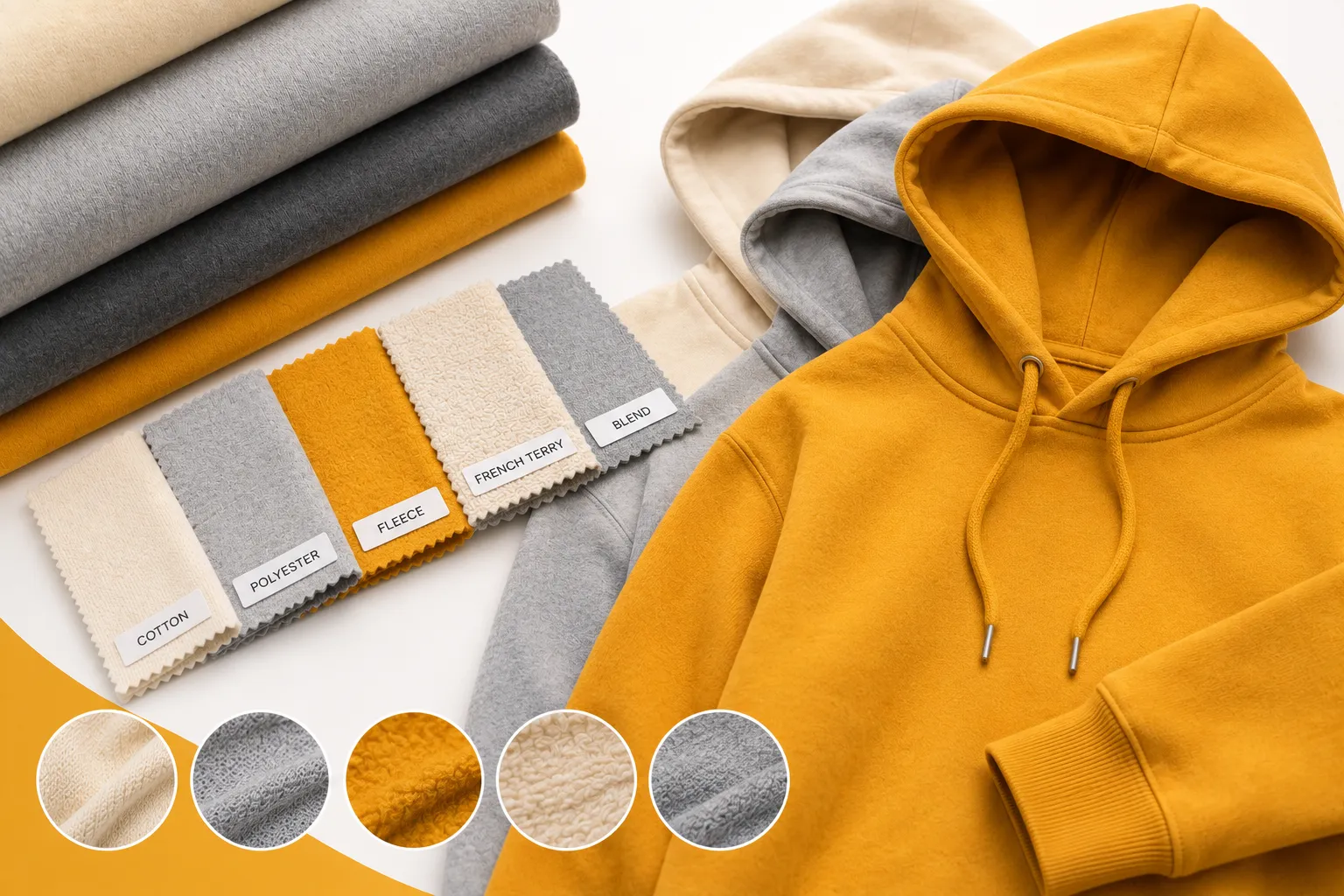
The fabric is one of the most important parts of a hoodie.
It affects how the hoodie feels, how warm it is, how it fits, how it behaves after washing and even how well a printed design looks.
When buying hoodies for personal use, these differences are useful. But they become even more important when you are ordering custom hoodies in bulk for a college, company, sports team, event or clothing brand.
You may come across terms such as:
- Cotton
- Polyester
- Cotton-polyester blend
- Fleece
- French terry
- Terry cotton
- Brushed fleece
These terms can be confusing because some describe the fiber, while others describe the fabric construction.
For example, cotton is a fiber, while fleece describes a type of fabric construction and finish.
Understanding this difference can help you choose the right hoodie instead of choosing only by price or GSM.
What Is Hoodie Fabric Made From?
Before comparing different hoodie fabrics, it helps to understand the basic idea of a textile.
A hoodie fabric starts with fibers.
These fibers are spun into yarn. The yarn is then knitted or processed into fabric.
The fibers can be natural, such as cotton, or synthetic, such as polyester.
The final hoodie can then have additional construction or finishing, such as:
- Fleece brushing
- French terry loops
- Ribbed cuffs
- Softening
- Pre-shrinking
- Anti-pilling treatment
This means two hoodies can have similar GSM but feel completely different.
The fiber, yarn, knitting method and finishing all contribute to the final garment.
Cotton Hoodies
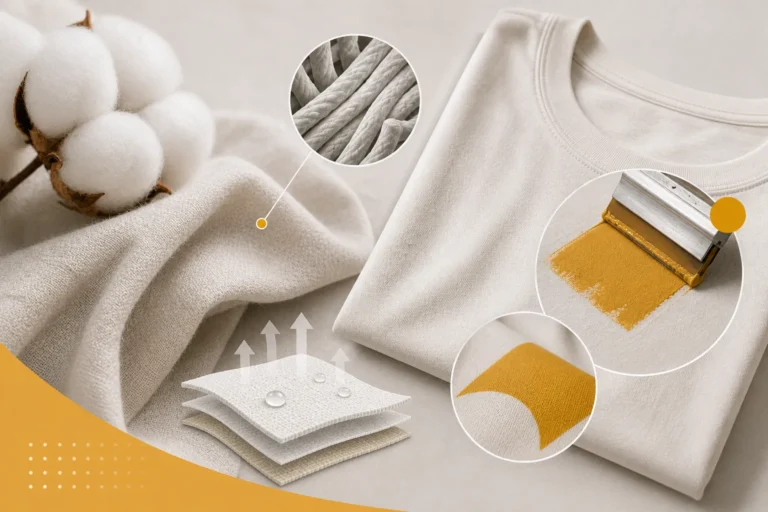
Cotton is one of the most familiar materials used in clothing.
It comes from the cotton plant and is a natural fiber.
Cotton is popular for hoodies because it can provide a soft and comfortable feel against the skin.
Why Is Cotton Popular?
Cotton can offer several useful properties:
- Soft hand feel
- Good breathability
- Comfortable everyday wear
- Natural fiber
- Good moisture absorption
- Suitable for casual clothing
This makes cotton a popular choice for everyday hoodies and merchandise.
Cotton also has a natural appearance that many people associate with premium casual clothing.
Advantages of Cotton Hoodies
One of the biggest advantages of cotton is comfort.
If a hoodie is going to be worn for several hours, comfort becomes important.
Cotton can also be useful for people who prefer natural fibers.
Another advantage is its ability to absorb moisture. However, this does not mean cotton is always the best material for sports or high-sweat activities.
Cotton can hold moisture instead of moving it away from the body quickly.
Disadvantages of Cotton
Cotton also has some limitations.
It can:
- Shrink if not properly treated
- Take longer to dry
- Absorb more moisture
- Lose some shape with poor construction
- Require more care during washing
The amount of shrinkage depends on the fabric, manufacturing process and finishing.
Pre-shrunk cotton can reduce this problem.
Polyester Hoodies
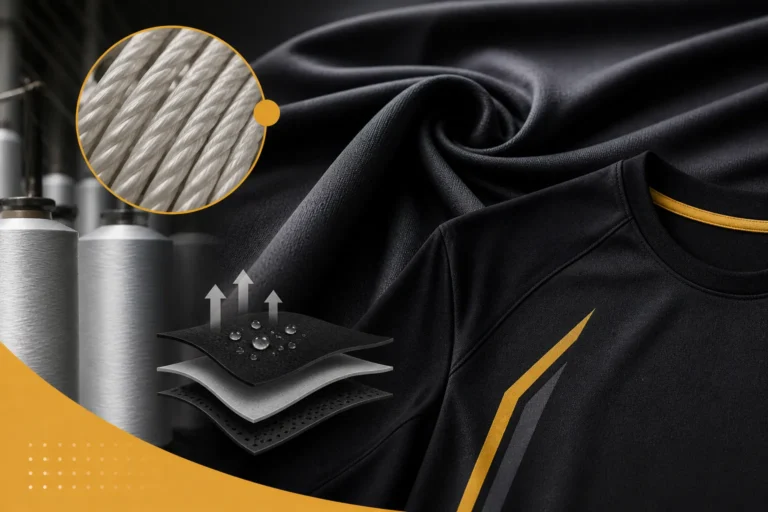
Polyester is a synthetic fiber.
Unlike cotton, it is not obtained from a plant. It is manufactured from polymer-based materials.
Polyester is widely used in clothing because it can provide good durability and resistance to shrinking.
Why Is Polyester Used in Hoodies?
Polyester can offer:
- Good durability
- Faster drying
- Better resistance to shrinking
- Shape retention
- Lower moisture absorption than cotton
- Good color retention
These properties can make polyester useful for activewear, sports apparel and garments that need to handle frequent washing.
However, polyester can feel different from cotton.
Some people prefer the natural softness of cotton, while others prefer the performance characteristics of polyester.
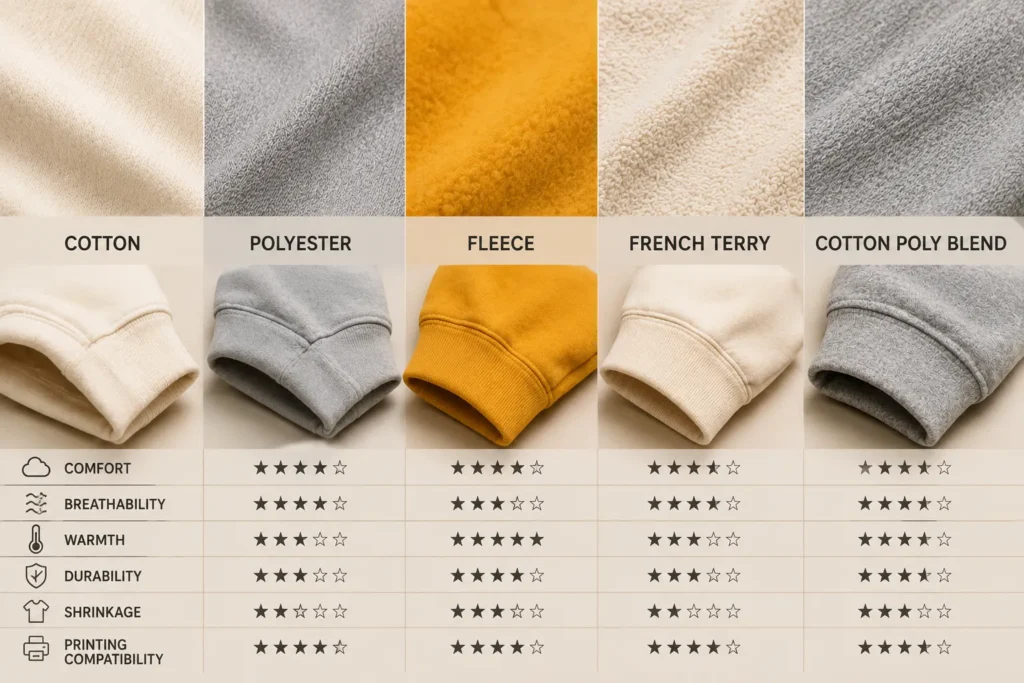
Cotton vs Polyester
The easiest way to understand the difference is to think about what you want from the hoodie.
| Feature | Cotton | Polyester |
|---|---|---|
| Fiber type | Natural | Synthetic |
| Feel | Soft and natural | Smooth or technical |
| Breathability | Generally good | Depends on construction |
| Moisture absorption | Higher | Lower |
| Drying | Slower | Faster |
| Shrinkage | Can shrink | Generally lower |
| Durability | Good | Very good |
| Sports use | Moderate | Often suitable |
| Everyday comfort | Excellent | Good to excellent |
This does not mean one is always better.
The better choice depends on the purpose of the hoodie.
Cotton-Polyester Blended Hoodies
A blend combines two or more fibers.
One of the most common combinations for hoodies is cotton and polyester.
The idea is simple: combine some of the useful properties of both materials.
For example, cotton can contribute softness and comfort, while polyester can improve durability and shape retention.
A blend may therefore provide a balance between:
- Comfort
- Durability
- Shrinkage control
- Moisture handling
- Cost
- Appearance
The exact performance depends on the percentage of each fiber.
A 70% cotton and 30% polyester hoodie will not behave exactly like a 50% cotton and 50% polyester hoodie.
This is why checking the actual composition is important.
What Is Fleece?
Fleece is commonly associated with warm and comfortable hoodies.
But there is an important point to understand.
Fleece is not necessarily a fiber.
It generally refers to a type of fabric construction and finishing.
A fleece fabric can be made using different fibers, including cotton, polyester or blends.
The inside of a fleece hoodie is often brushed to create a soft, fluffy surface.
This creates tiny fibers that can trap air and provide additional warmth.
Why Is Fleece Warm?
The brushed inside of fleece creates a layer that can hold air.
Air is a poor conductor of heat, so trapped air can help reduce heat loss from the body.
This is one reason fleece hoodies feel warmer than many lightweight sweatshirt fabrics.
The warmth of a hoodie still depends on several factors, including:
- GSM
- Fiber type
- Fabric construction
- Brushing
- Fit
- Wind exposure
- Layering
So simply seeing the word “fleece” does not tell you exactly how warm the hoodie will be.
What Is French Terry?
French terry is another popular fabric construction used for hoodies and sweatshirts.
It has a smooth outer surface and small loops on the inside.
These loops are different from the brushed surface found in fleece.
Because French terry does not normally have the same heavily brushed inner surface as fleece, it can feel lighter and more breathable.
This makes it useful when you want a hoodie that is comfortable without being extremely warm.
French Terry vs Fleece
The difference is easiest to understand by looking at the inside of the fabric.
Fleece:
The inside is usually brushed and soft.
French terry:
The inside usually has small loops.
This creates different wearing experiences.
| Feature | Fleece | French Terry |
|---|---|---|
| Inner surface | Brushed | Looped |
| Warmth | Generally higher | Generally lower |
| Feel | Soft and fluffy | Smooth/looped |
| Breathability | Moderate | Generally higher |
| Best for | Colder conditions | Mild conditions |
| Weight | Can vary | Can vary |
Neither fabric is automatically better.
They are simply designed for different requirements.
What Is Terry Cotton?
You may also hear the term terry cotton.
Terry is a fabric construction that uses loops of yarn.
These loops can help the fabric absorb moisture and create a soft texture.
French terry is a lighter version commonly used in sweatshirts and hoodies.
The exact terms used by manufacturers can vary, so it is always useful to ask for the actual fabric specification instead of relying only on a product name.
Does Fabric Affect Hoodie GSM?
Yes.
GSM means grams per square meter and measures the weight of the fabric.
A higher GSM generally means more fabric weight per square meter.
For example, a 300 GSM fabric is heavier than a 200 GSM fabric.
But GSM does not tell you everything about the hoodie.
A 300 GSM cotton hoodie and a 300 GSM polyester hoodie can feel different.
Likewise, two 300 GSM fleece fabrics can have different levels of softness and warmth.
This is because GSM and fabric composition describe different things.
GSM tells you about weight.
Composition tells you what the fabric is made from.
Construction tells you how the fabric is made.
You need all three pieces of information to understand the hoodie properly.
How Fabric Affects Hoodie Comfort
Comfort is not determined by one factor.
It comes from the combination of:
- Fiber
- Fabric construction
- GSM
- Fit
- Softness
- Breathability
- Stretch
- Finishing
Cotton can provide a soft, natural feel.
Polyester can provide durability and quick drying.
Fleece can provide additional warmth.
French terry can provide a lighter and more breathable feel.
A blend can combine some of these characteristics.
This is why fabric selection should start with the intended use.
How Fabric Affects Shrinkage
Shrinkage is an important consideration when buying or manufacturing hoodies.
Cotton can shrink because natural cotton fibers can change during washing and drying.
The amount of shrinkage depends on:
- Fiber quality
- Knitting
- Washing process
- Pre-shrinking
- Finishing
- Washing temperature
- Drying method
Polyester generally has lower shrinkage than cotton.
Blended fabrics can offer a balance between the properties of the two fibers.
For bulk orders, shrinkage is particularly important because even a small change in garment measurements can affect the fit.
This is why manufacturers should use proper fabric processing and buyers should check sizing carefully.
How Fabric Affects Durability
Durability depends on much more than the fiber.
A hoodie can have high-quality cotton but still perform poorly if the stitching and construction are weak.
Important factors include:
- Yarn quality
- Fabric construction
- Stitch density
- Seam strength
- Rib quality
- Washing
- Printing
- Garment finishing
Polyester is generally known for good durability, but that does not mean every polyester hoodie is better than every cotton hoodie.
The quality of the entire garment matters.
How Fabric Affects Breathability
Breathability refers to how easily air and moisture can move through a fabric.
Cotton is generally considered comfortable and breathable for everyday use.
French terry can also be useful when breathability is important.
Polyester can behave differently depending on how it is knitted and finished.
For example, a technical polyester fabric designed for sports can have very different performance from a dense polyester fleece.
This is another reason why simply saying “polyester” does not tell you the complete story.
How Fabric Affects Hoodie Printing
Fabric selection is also important for custom printed hoodies.
Different printing methods work better with different fabrics and garment surfaces.
Common decoration methods include:
- DTF printing
- DTG printing
- Screen printing
- Embroidery
The correct method depends on factors such as:
- Fabric composition
- Hoodie color
- Artwork
- Number of colors
- Design size
- Quantity
- Required durability
- Desired finish
For example, a detailed multi-color design may require a different approach from a simple one-color logo.
The surface of the hoodie also matters.
A heavily textured or fuzzy surface can affect the final appearance of a print.
This is why the fabric should be selected before finalizing the printing process.
For businesses, colleges and organizations planning bulk orders, you can explore TrendyDice custom printed hoodies to choose a suitable hoodie and customization approach for your requirement.
Which Hoodie Fabric Is Best for Winter?
If warmth is the main goal, a fleece hoodie can be a strong option.
A brushed inner surface can provide additional warmth, especially when combined with a suitable GSM.
For colder weather, buyers may look at:
- Higher GSM
- Fleece construction
- Cotton-rich fabrics
- Cotton-polyester blends
- Well-fitted designs
However, the climate matters.
A very heavy fleece hoodie may be uncomfortable in a place with mild winters.
Which Hoodie Fabric Is Best for Mild Weather?
For mild conditions, a lighter fabric such as French terry may be more comfortable.
A lower or medium GSM can also make the garment easier to wear.
This can be useful for:
- College events
- Corporate events
- Indoor merchandise
- Travel
- Spring and autumn
- Mild Indian winters
The objective is to get enough warmth without making the hoodie unnecessarily heavy.
Which Fabric Is Best for Sports Hoodies?
Sports use creates different requirements.
A sports hoodie may need:
- Good mobility
- Moisture management
- Faster drying
- Durability
- Comfortable fit
Polyester or polyester blends can be useful for these requirements.
However, the right choice depends on the sport and whether the hoodie is being used during physical activity or simply before and after training.
A hoodie used for warm-up is not necessarily designed like a performance sports jersey.
Which Fabric Is Best for College Hoodies?
College merchandise needs to balance several factors.
Students generally want something comfortable, attractive and durable.
At the same time, the college or organizer needs to control the total cost of a bulk order.
Cotton, cotton-polyester blends and fleece can all work depending on:
- Season
- Budget
- Required GSM
- Design
- Quantity
- Intended use
The printing method should also be selected according to the design.
A large college logo may have different requirements from a detailed artwork or illustration.
Which Fabric Is Best for Corporate Hoodies?
Corporate hoodies are often used for:
- Employee merchandise
- Company events
- Team outings
- Promotional campaigns
- Brand merchandise
- Client gifts
For these applications, comfort and professional appearance are both important.
A medium-weight cotton or cotton-blend hoodie can provide a good balance for many corporate applications.
If the hoodie will be used outdoors during colder weather, a heavier fleece option may make more sense.
How to Choose the Right Hoodie Fabric
Instead of asking, “Which fabric is the best?”, ask:
What will the hoodie be used for?
Then consider the following.
1. Consider the Weather
Cold weather may require fleece or a heavier fabric.
Mild weather may be better suited to French terry or lighter-weight fabrics.
2. Consider the Wearer
A college student, employee, athlete and outdoor worker may all have different requirements.
3. Consider the GSM
GSM helps you understand fabric weight.
But remember that it should be considered alongside construction and composition.
4. Consider the Fit
An oversized hoodie and a regular-fit hoodie can feel different even when they use the same fabric.
5. Consider the Printing Method
Tell your supplier about the artwork before finalizing the garment.
The fabric and printing method should work together.
6. Consider Washing
For bulk merchandise, ask how the garment is expected to behave after repeated washing.
7. Always Check a Sample
If you are ordering hundreds of hoodies, a sample is extremely valuable.
You can check:
- Fabric feel
- GSM
- Color
- Fit
- Stitching
- Print quality
- Hood construction
- Ribbing
- Washing behavior
A sample can reveal problems that are difficult to identify from a product photograph.
Cotton vs Polyester vs Fleece vs French Terry: Quick Guide
If you want a simple starting point:
Choose cotton when:
Comfort and a natural feel are your main priorities.
Choose polyester when:
Durability, quick drying and performance are important.
Choose fleece when:
Warmth and a soft inner surface are priorities.
Choose French terry when:
You want a lighter and more breathable sweatshirt or hoodie.
Choose a blend when:
You want to balance the characteristics of multiple fibers.
But these are starting points, not fixed rules.
The actual fabric specification should always be checked before placing a large order.
Final Thoughts
Choosing hoodie fabric is about much more than choosing between cotton and polyester.
You need to understand the difference between fiber, fabric construction and fabric weight.
Cotton can offer natural softness and everyday comfort.
Polyester can provide durability and faster drying.
Cotton-polyester blends can balance the properties of both.
Fleece can provide additional warmth through its brushed inner surface.
French terry can offer a lighter and more breathable alternative.
GSM then adds another layer to the decision by telling you how much the fabric weighs per square meter.
For custom hoodies, the printing method is equally important. The best hoodie is one where the fabric, GSM, fit and printing process work together.
Whether you are ordering hoodies for a college, company, sports team, event or clothing brand, choosing the fabric based on the actual use case will usually produce a better result than simply choosing the cheapest or heaviest option.
If you are planning a bulk order, explore custom printed hoodies from TrendyDice to find a hoodie suitable for your fabric, printing and branding requirements.