Connect With Us

Cotton vs Polyester: Understanding Fabric Behavior in Custom Apparel
April 1, 2026/hashtag.trendydice@gmail.com/No Comments
Choosing between cotton and polyester is one of the most important decisions in custom apparel because it directly affects comfort, durability, printing compatibility, climate performance, and user experience. These two fabrics belong to fundamentally different material categories—cotton being a natural cellulose fiber and polyester being a synthetic polymer fiber.
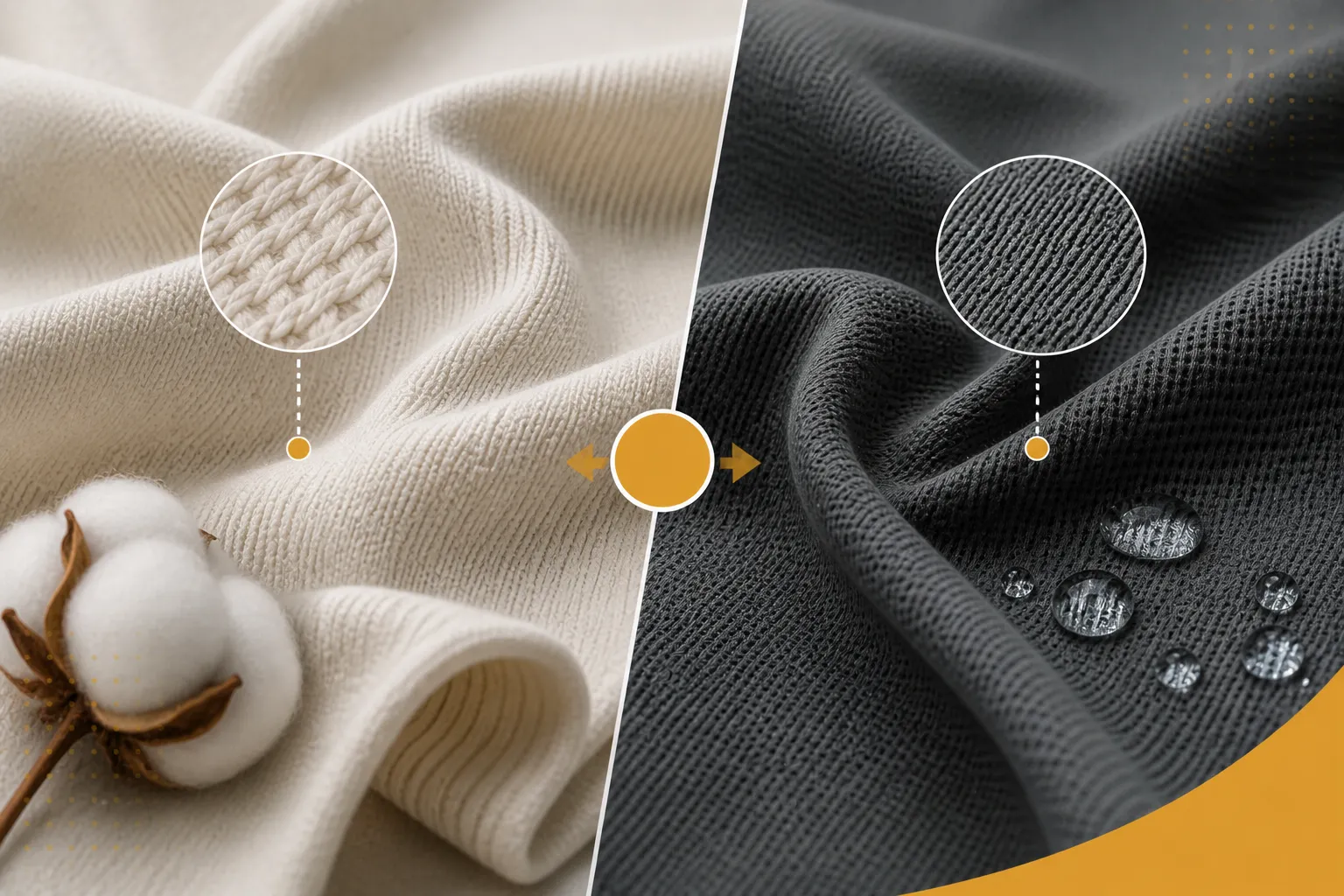
From a semantic and entity-driven perspective, cotton is associated with breathability, moisture absorption, softness, and ink integration, while polyester is connected to moisture-wicking, tensile strength, thermal stability, and sublimation compatibility. These relationships determine how each fabric performs in real-world use cases such as corporate apparel, college merchandise, sportswear, and promotional T-shirts.
What is Cotton Fabric? Fiber Structure and Functional Properties
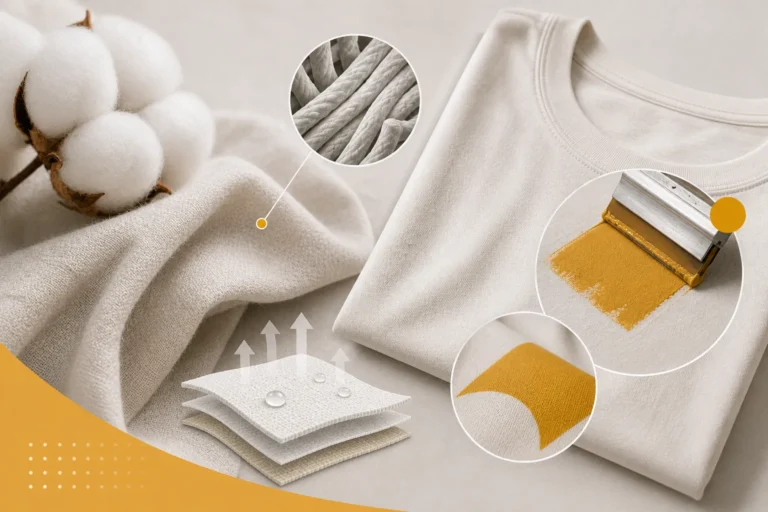
Cotton is a natural fiber derived from the cotton plant, composed primarily of cellulose microfibrils. Its structure creates a porous surface that allows air and moisture interaction.
Moisture Absorption and Breathability
Cotton absorbs sweat directly into the fibers, allowing the skin to breathe. This makes it highly suitable for casual wear and hot climates.
Softness and Skin Comfort
Due to its natural origin, cotton provides a soft, non-irritating feel, making it ideal for prolonged wear.
Printing Compatibility
Cotton works exceptionally well with:
- Screen printing
- DTG printing
- Water-based inks
Its absorbent nature allows ink to penetrate the fabric, creating long-lasting and vibrant prints.
What is Polyester Fabric? Engineered Performance Material
Polyester is a synthetic fiber created through polymerization, designed for strength, durability, and performance.
Moisture-Wicking Mechanism
Unlike cotton, polyester does not absorb moisture. Instead, it uses capillary action to move sweat to the surface, enabling faster evaporation.
Durability and Shape Retention
Polyester is resistant to:
- shrinking
- stretching
- wrinkling
making it ideal for repeated use and harsh conditions.
Printing Compatibility
Polyester is best suited for:
- Sublimation printing
- DTF printing
It does not absorb ink but allows dye to bond through heat.
Cotton vs Polyester: Key Differences That Matter
1. Comfort and Wearability
Cotton provides a natural, breathable feel, making it comfortable for everyday use.
Polyester is lighter and performance-oriented but may feel less natural on the skin.
2. Moisture Handling
Cotton absorbs moisture, which can lead to a heavier feel when wet.
Polyester wicks moisture away, keeping the body dry during activity.
3. Durability and Lifespan
Polyester has higher durability and retains its structure over time.
Cotton may wear out faster if not properly maintained.
4. Printing Performance
Cotton supports direct ink absorption, making it ideal for detailed and soft prints.
Polyester supports heat-based dye bonding, making it ideal for vibrant, long-lasting graphics.
5. Climate Suitability
Cotton performs well in dry heat and casual conditions.
Polyester performs better in humid, high-activity environments.
Cotton vs Polyester: Comparison Table
| Feature | Cotton | Polyester |
|---|---|---|
| Fiber Type | Natural | Synthetic |
| Comfort | High | Medium |
| Breathability | High | Medium |
| Moisture Handling | Absorbs | Wicks |
| Durability | Medium | High |
| Printing Compatibility | Excellent | Method-specific |
| Drying Speed | Slow | Fast |
Which Fabric is Better for Custom T-Shirts?
The answer depends on the use case.
Everyday & Casual Wear
Cotton is better due to its comfort and breathability. It is widely used in custom T-shirts for daily wear.
Sports & Performance Wear
Polyester is ideal because of its moisture-wicking and quick-dry properties, especially in Dri-Fit T-shirts.
Bulk Merchandise & Branding
Cotton is preferred for print clarity and feel, especially for round neck T-shirts used in events and promotions.
Team & Athletic Apparel
Polyester dominates due to performance benefits, especially in jerseys and sportswear.
Printing Impact: Cotton vs Polyester
Printing behavior is one of the most critical deciding factors.
Cotton
- absorbs ink
- produces softer prints
- ideal for screen & DTG
Polyester
- requires heat transfer
- produces vibrant prints
- ideal for sublimation
This makes fabric selection directly tied to printing method selection.
Cotton-Polyester Blends: Balanced Fabric Engineering
Blended fabrics combine the strengths of both fibers.
Benefits
- improved durability
- reduced shrinkage
- balanced comfort
Blends are commonly used in corporate apparel and budget-friendly merchandise.
Common Mistakes When Choosing Fabric
- choosing cotton for sportswear
- choosing polyester for premium casual wear
- ignoring printing compatibility
- not considering climate
Avoiding these mistakes improves customer satisfaction and product performance.
How TrendyDice Helps You Choose the Right Fabric
At TrendyDice, fabric selection is guided by:
- usage intent
- printing method
- design complexity
- budget
We ensure:
- optimal comfort
- correct printing compatibility
- long-term durability
This approach helps deliver apparel that performs both functionally and visually.
Frequently Asked Questions
Is cotton better than polyester for T-shirts?
Cotton is better for comfort, while polyester is better for performance and durability.
Which fabric is best for printing?
Cotton is best for screen and DTG printing, while polyester is best for sublimation and DTF printing.
Which fabric lasts longer?
Polyester generally lasts longer due to its synthetic strength and resistance to wear.
Is polyester good for hot weather?
Yes, especially for sportswear, as it helps keep the body dry through moisture-wicking.
Can cotton and polyester be blended?
Yes, blends combine comfort and durability, making them suitable for various applications.